Why antqr matters for community organizers
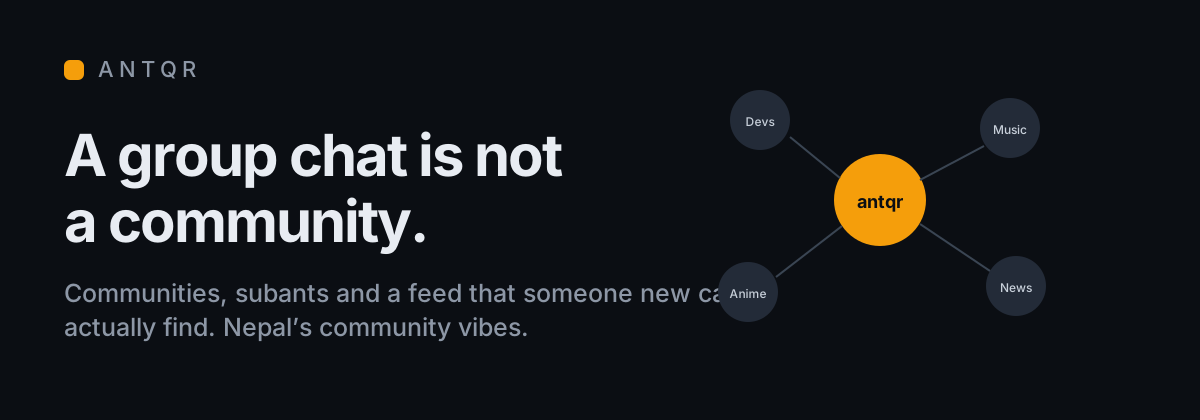
If you run a local group — a developers' club, a music scene, an anime circle — you almost certainly run it inside something that was not built for it. A Facebook group. A Viber thread that hit its member limit. An Instagram page where the only way to talk to people is a comment section.
They work, in the sense that people are in them. They also quietly cost you things, and most organizers never get to name what.
antqr is built around those costs. Here is what changes.
1. You are renting your own front door
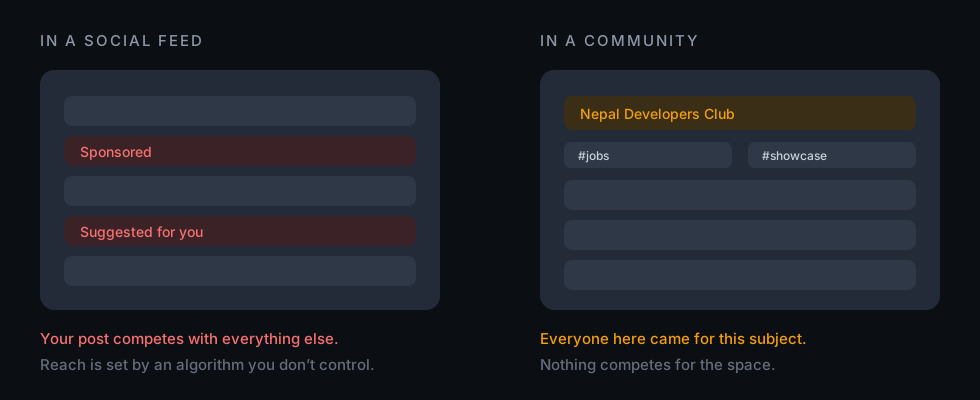
In a general social feed, your post about Saturday's meetup competes with a wedding, a news clip, three ads and someone's cousin's exam results. You are not speaking to your members. You are entering your members' attention into a lottery you do not run.
The organizer's version of this is painfully familiar: 400 people in the group, 30 who see the post, 9 who show up. You did not have a turnout problem. You had a distribution problem wearing a turnout costume.
A community on antqr is a place rather than a slot in someone else's feed. Everyone who is there arrived for the subject. Nothing else is bidding for the same space.
2. A community is never about one thing
This is the failure that kills most local groups, and it is not a people problem — it is a shape problem.
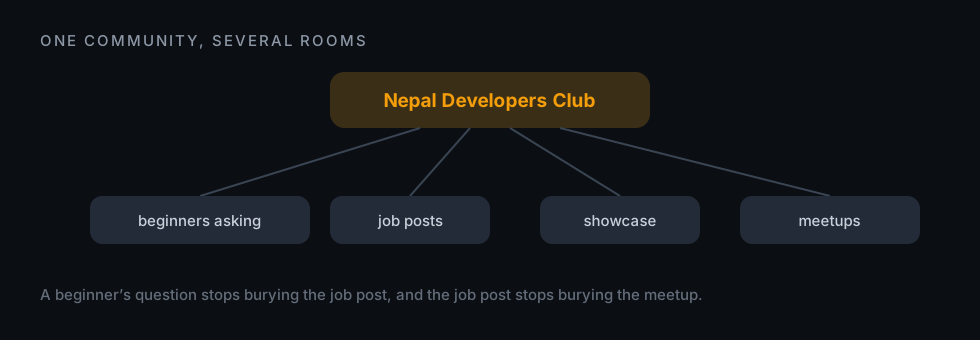
A developers' club is at least four conversations. Beginners asking questions. People posting jobs. People showing what they made. People organising the next meetup. In a single flat thread, all four fight for the same screen, and the fastest-moving one wins. The beginner's question gets buried by the job post. The job post gets buried by the meetup. Eventually the beginners stop asking, because asking in public stopped working.
Subants split one community into rooms. The question, the job and the meetup each get somewhere to live. Nobody has to scroll past three conversations to reach the one they came for — and nobody has to leave a group because "it got too noisy," which is what people say when they mean "it got too general."
3. The part a group chat can structurally never do
A group chat is excellent at holding people who are already in it. It is completely incapable of finding you the next person.
There is no way for a Kathmandu student who just started writing code to discover your developers' club by being interested in code. They have to already know someone in it. Every group with an invite link has an invisible ceiling made of who your existing members happen to know.
Discovery is the difference. Communities can be browsed. Trending hashtags surface what is active right now. A personalised feed can put your community in front of someone who never knew to search for it. Your reach stops being capped by your members' address books.
For an organizer, that is the single most valuable thing on this list: growth that does not depend on you personally recruiting every member.
4. Local, and honest about it
antqr is Nepal's community platform, and that is a design decision rather than a market description.
A global platform serves a Nepali dev club the same way it serves a Californian one, which means it serves neither especially well. The examples on antqr — the Nepal Developers Club, music, anime — are the actual shape of what people here gather around. World news from NYT and BBC sits alongside them rather than replacing them.
Direct messages, saved posts, notifications and profiles are all there, because a community that cannot have a quiet one-to-one conversation is only half a community. But the centre of gravity is the community itself, not the feed.
5. What an organizer actually gets
Three things a chat thread cannot give you:
- A room per conversation, so the quiet members stay.
- A front door, so people who should be in your group can find it without knowing you.
- A place that stays put, so the group is not one algorithm change away from being invisible.
Running a community is mostly unpaid work done by someone who cares. The least a platform can do is stop making that work harder than it needs to be.
New writing, in your inbox.
An email when I publish something new. No digest, no newsletter series, and one click to leave.
Prefer a reader? RSS.